EU GMP Updates 2026: What Irish Life Sciences Teams Need to Know
Good Manufacturing Practice is continuously updated as manufacturing technology, data systems, supply chains and regulatory risks evolve. However, pharmaceutical organisations need to distinguish between current requirements, published revisions and consultation drafts.
As of 30 July 2026, the proposed revisions to EU GMP Chapter 4 and Annex 11 and the proposed new Annex 22 on artificial intelligence have not been published as final EU GMP requirements. The consultation closed on 7 October 2025, but the official EudraLex Volume 4 page continues to list the January 2011 versions of Chapter 4 and Annex 11 and does not list Annex 22 as a final annex.
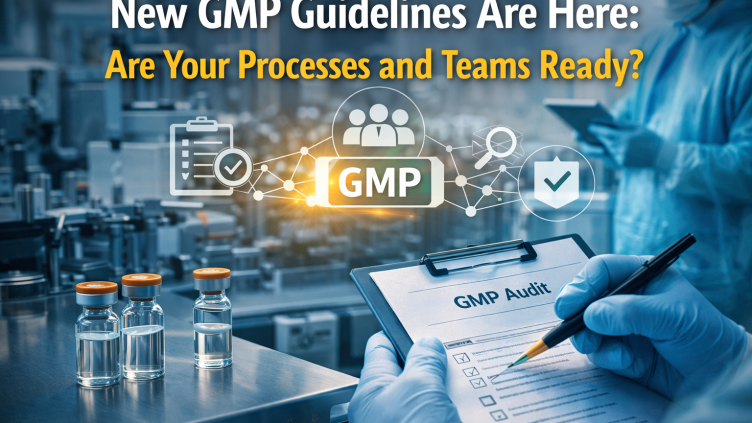
Irish pharmaceutical and biopharmaceutical employers should still study the drafts and prepare for their likely direction. They should not, however, describe draft wording as legally operative or give teams an unconfirmed implementation date.
What Is the Current Status of the EU GMP Updates?
| GMP document | Status on 30 July 2026 |
|---|---|
| Chapter 4: Documentation | Proposed revision; consultation closed |
| Annex 11: Computerised Systems | Proposed revision; consultation closed |
| Annex 22: Artificial Intelligence | Proposed new annex; consultation closed |
| Annex 19: Reference and Retention Samples | Final revision published; applicable 24 September 2026 |
| Annex 1: Sterile Medicinal Products | Fully applicable since 25 August 2024 |
The European Commission consulted stakeholders on Chapter 4, Annex 11 and Annex 22 between July and October 2025. The drafts were developed to address electronic documentation, modern computerised systems and the use of AI and machine learning in pharmaceutical manufacturing.
The article should not predict that these documents will take effect during 2026 or 2027 unless the European Commission publishes a final version and confirmed implementation date.
Draft Chapter 4: Documentation
A major workstream underway across the EU regulatory landscape is the revision of three core elements of the EU GMP Guidelines:
- Annex 11: Computerised Systems, has expanded to include modern digital platforms, cloud computing, third‑party software, and CI/CD practices.
- Chapter 4: Documentation, updated to reflect the need for robust, electronic, and hybrid records management.
- Annex 22: Artificial Intelligence (AI), a newly drafted annex focused on GMP use of AI tools.
Draft versions were published for public consultation until October 2025, with final publication expected in mid‑2026 and likely implementation over 2026-2027.
What teams should do now
Teams that rely on legacy paper systems or siloed software must urgently shift to modern, validated environments. We’re seeing a demand from hiring managers for candidates with experience in computerised system validation (CSV), risk‑based digital compliance, and documentation automation.
Quality Risk Management Is Being Reframed
ICH Q9 (Quality Risk Management) principles are now central to how GMP revisions are being interpreted globally. Modern risk management emphasises decision science and evidence‑led approaches, not just checklists.
Expectation shift for teams:
- Risk management must be proactive and embedded in daily operations
- AI and automation tools may be used to generate risk scenarios, but human oversight remains essential
- Documentation of decision quality (not just outcomes) will be scrutinised in audits
Hiring managers are workforce planning for quality professionals with robust risk competency and decision science experience to meet higher demand, particularly those who can integrate risk frameworks with operational workflows.
Check out: Quality Jobs in Ireland
Distribution Compliance (GDP) Is Also Tightening
While not strictly GMP, updated Good Distribution Practice (GDP) guidance has implications for quality and supply chain teams. Sections on supplier approval, product verification, and decommissioning identifiers have all been expanded.
Takeaway:
Whether you work in quality assurance, supply chain, or wholesale/distribution operations, organisations are now hiring with a sharper eye on GDP experience and compliance culture.
If you're considering contracting, check out: Quality Contracting Rate Guide Ireland 2026
What This Means for Candidates
If you’re aiming for roles in quality, validation, regulatory affairs, or manufacturing oversight in Ireland:
- Digital systems experience is now essential. Modern GMP compliance relies heavily on validated software and automated documentation.
- Risk management competency goes beyond theory. Employers want professionals who can demonstrate decisions made using risk science.
- Sector‑specific GMP knowledge is rare and valuable. Radio pharma, APIs, sterile manufacturing, and distribution controls are all evolving, and expertise in these areas will command premium opportunities.
What This Means for Hiring Managers
From a workforce planning perspective:
- Audit preparedness is a hiring driver. The expanding digital and documentation requirements push organisations to hire or upskill for CSV, PQS integration, and digital compliance expertise.
- Contract talent may bridge skill gaps. Specialist compliance roles, particularly around Annex 11, documentation systems, and radio pharma GMP, may best be fulfilled initially with experienced contract professionals.
- Training and internal development matters. Given ongoing revisions, internal quality teams must be supported with training on evolving GMP standards.
Plan your next hire check out: Permanent Salary Guide Ireland 2026 and Contracting Rate Guide Ireland 2026
If your team needs GMP‑ready compliance expertise, whether for immediate audit cycles, documentation transformation, or advanced quality systems connect with our specialists: hello@hero.ie or (01) 619 0279.
FAQs
Search Jobs
Match my CV
We take the hard work out of finding you a new job. Simply upload your CV (or call us) and we’ll get hunting for you!
Subscribe to The Shift for the latest STEM industry and career updates.

Join The Shift!
Get insider updates on the hottest industry trends, cutting-edge career advice, and exclusive talent insights. Stay ahead of the curve and keep your finger on the pulse of Ireland’s STEM talent trends. Exciting content coming your way soon!