IT Skills in Demand in Ireland 2026: Careers and Upskilling
Ireland’s technology market in 2026 is changing quickly. Artificial intelligence is influencing how software is built, data is analysed and business processes are automated, while cybersecurity, cloud infrastructure and reliable digital services remain essential across almost every industry.
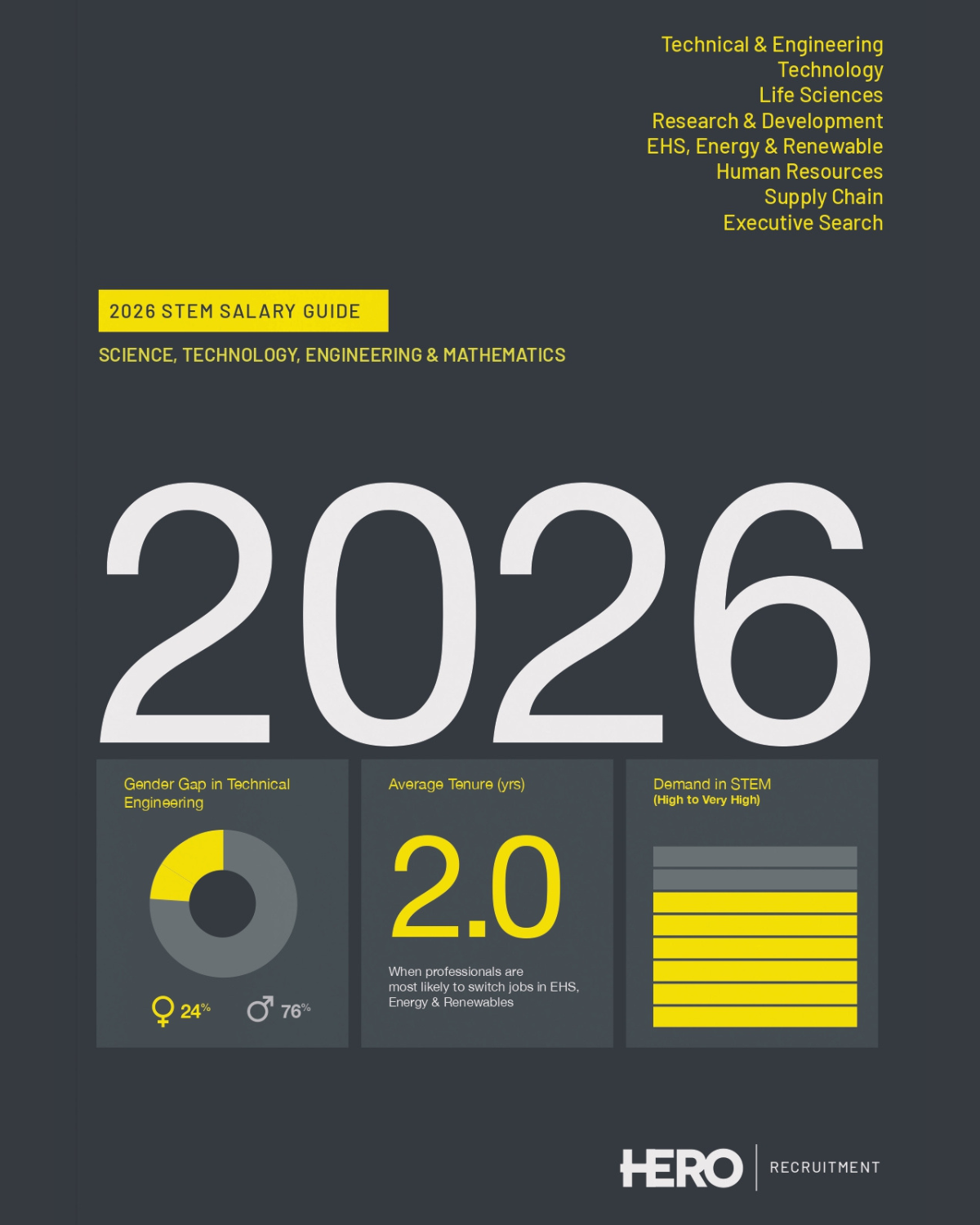
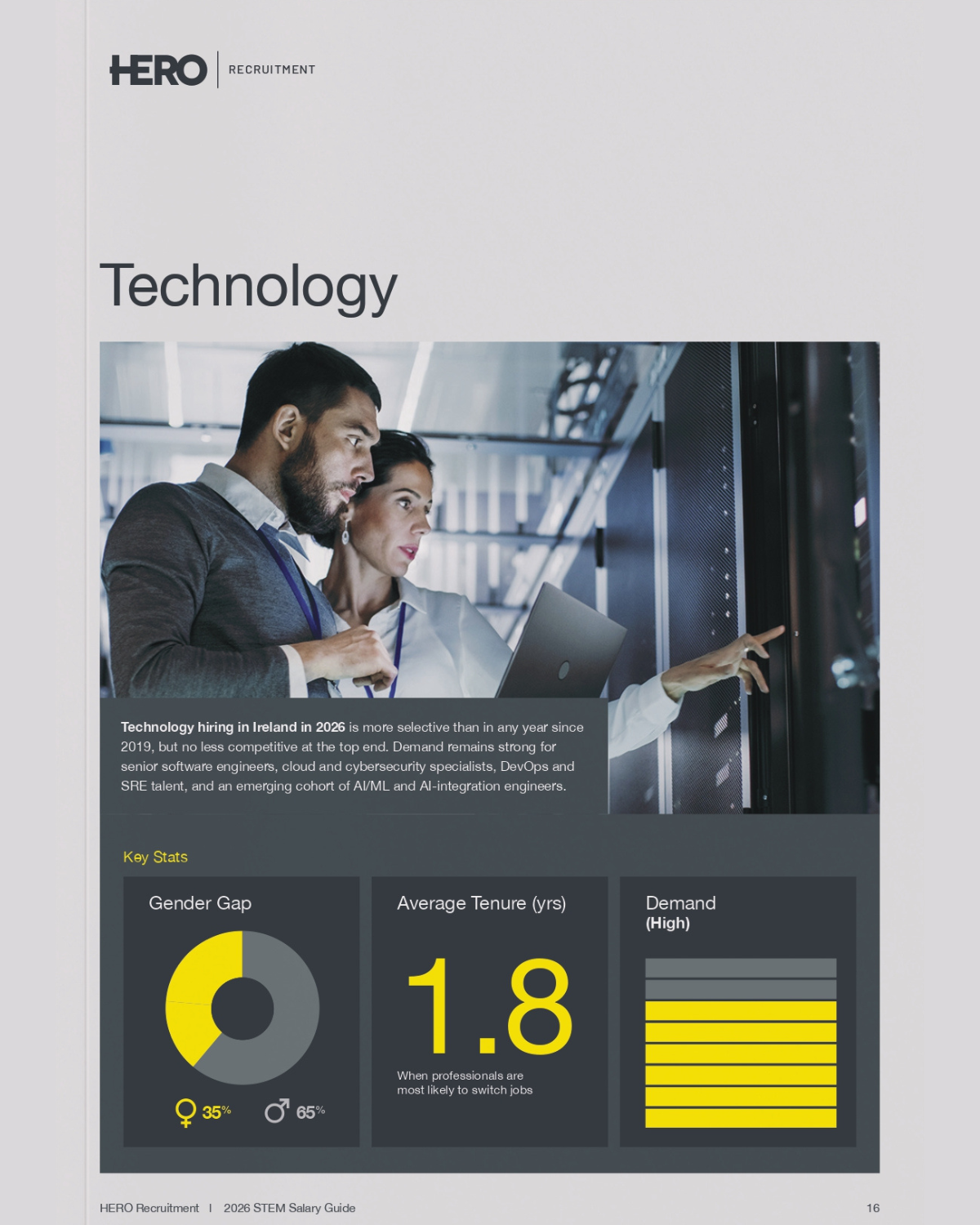
That does not mean every technology skill is equally valuable or that employers are hiring indiscriminately. HERO’s IT Salary Guide Ireland 2026 shows a more selective market, particularly at entry level, with stronger demand for experienced professionals in software engineering, cloud, cybersecurity, DevOps, data, architecture and AI-related roles.
Ireland also continues to perform strongly on wider digital capability. The 2026 Digital Decade Country Report, cited by the Department of Enterprise, Tourism and Employment, places Ireland second in the EU for basic digital skills, with 83% of the population possessing at least basic digital skills. Ireland also ranked fifth for generative-AI adoption at 45%.
For technology professionals, the opportunity is therefore less about learning every new tool and more about developing a combination of technical depth, practical experience and business understanding that employers can use.
What IT Skills Are in Demand in Ireland in 2026?
There is no single skill that guarantees a technology job.
Demand depends on the role, sector, seniority and problem an employer needs to solve. A cybersecurity engineer requires a different technical foundation from a data engineer, while a software architect is evaluated differently from someone entering technical support.
The strongest career strategy is to choose a direction first and then build the capabilities that support it.
Ireland’s current Critical Skills Occupations List provides useful evidence of where specialist technology capability remains economically important. The list, effective from 13 May 2026, includes IT specialist managers, IT project and programme managers, business analysts, architects and systems designers, programmers, software-development professionals, web-development professionals and other ICT professionals.
AI and Machine Learning
Artificial intelligence has moved from a specialist research topic into a much broader part of technology delivery. Employers increasingly need people who can build AI-enabled systems, integrate models into existing applications, prepare and govern data, evaluate outputs and understand where automated decisions create technical, commercial or regulatory risk. For someone pursuing an AI or machine-learning career, learning a programming language such as Python is useful, but programming alone is not enough. Stronger profiles usually combine software-development fundamentals with data preparation, statistics, model evaluation, APIs, cloud infrastructure and an understanding of how AI systems behave after deployment.
Ireland’s Digital Ireland – Connecting our People, Securing our Future strategy places AI and digital transformation at the centre of national economic policy through 2030. The State has also established the AI Office of Ireland under the Regulation of Artificial Intelligence Act 2026, increasing the importance of understanding trustworthy AI, governance and the EU AI Act alongside technical implementation.
Software Engineering
Software engineering remains one of the foundations of Ireland’s technology market. The original version of this article described Python and Java as “non-negotiable.” That is too simplistic. The right programming language depends on the technology stack and type of work. Python may be highly relevant to data, automation and AI. Java and C# remain important in enterprise software. JavaScript and TypeScript are common in web and application development. SQL remains valuable wherever applications interact with structured data.
Employers generally need more than knowledge of syntax. A developer who can write code but cannot test it, review it, deploy it or understand how it behaves in production has a narrower skill set than someone who understands the broader software lifecycle. Building capability in source control, automated testing, APIs, databases, debugging, application security and deployment therefore strengthens a software-development profile.
Cloud, DevOps and Site Reliability Engineering
Cloud skills become much more valuable when they are connected with an understanding of how systems are built and operated. Cloud engineers may work with compute, networking, identity, storage, databases and security. DevOps professionals concentrate on improving how software moves from development into reliable production environments. Site Reliability Engineering brings software-engineering methods into system reliability, monitoring and operational performance.
The specific platform matters, but the underlying concepts are often more important than memorising one interface. Understanding Linux, networking, containers, infrastructure as code, CI/CD pipelines, observability, access control and automation creates a foundation that can transfer between cloud environments. Candidates moving into this area should therefore avoid collecting cloud certifications without building anything. A small environment that has been provisioned, secured, monitored and documented provides evidence of practical understanding.
Cybersecurity
The field includes security operations, incident response, cloud security, application security, security architecture, identity and access management, governance, risk, penetration testing and security leadership. Someone trying to enter cybersecurity should therefore decide which part of the discipline they want to pursue before selecting training.
A security operations role may require stronger knowledge of networking, operating systems, logs and threat detection. Application security sits closer to software development. Cloud security requires understanding of identity, infrastructure and cloud architecture. Governance and risk roles place greater emphasis on controls, frameworks, evidence and communication with the wider organisation.
Ireland’s National Cyber Security Centre identifies workforce development as a national priority and specifically calls for investment in educational initiatives to prepare people for advanced IT and cybersecurity careers. It also emphasises stronger cybersecurity capability across government, businesses and critical infrastructure.
Communication Is Still a Technical Career Skill
Technology increasingly crosses organisational boundaries. A cloud engineer may need to explain cost and resilience to management. A cybersecurity professional may need to translate technical risk for a non-technical audience. A developer may need to understand why a customer needs a feature rather than simply how to build it.
Communication therefore becomes more important as technical seniority increases. This does not mean replacing technical depth with “soft skills.” It means being able to use technical knowledge effectively within a team and organisation. Strong professionals can explain assumptions, document decisions, challenge a proposal constructively and adapt their level of detail depending on the audience.
Government-Supported IT Upskilling in Ireland
Professionals do not necessarily need to fund an entirely new degree to build relevant technology capability.
The Higher Education Authority’s Springboard+ 2026 programme provides more than 7,200 places across 244 courses delivered by 36 education providers. The programme includes courses in artificial intelligence and digital technologies alongside other identified skills areas.
Springboard+ is available to people in different employment situations, including those already working, unemployed people, people who are self-employed and those returning to the workforce. Many programmes are delivered part-time, online or flexibly. For 2026, unemployed participants and returners may qualify for fully funded courses, while employed participants generally pay 10% of the course fee. Micro-credentials receive a separate 50% fee subsidy. Eligibility varies by programme, so applicants should check the current HEA conditions before applying.
IT Salaries in Ireland in 2026
Technology salaries vary substantially depending on specialisation and seniority. There is no meaningful single “average IT salary” that represents a Software Engineer, Cybersecurity Architect, Data Engineer, Project Manager and CTO.
HERO’s IT Salary Guide Ireland 2026 therefore benchmarks individual positions across experience bands. For example, DevOps and Site Reliability Engineers are benchmarked at €40,000-€55,000 in the earlier experience band, €55,000-€75,000 in the middle band and €75,000-€100,000 for professionals with more than five years of relevant experience.
At leadership level, HERO benchmarks IT Director and CTO salaries from €100,000-€120,000 at the lower relevant-experience band through to €135,000-€150,000 for those with more than five years of relevant leadership experience. These are base-salary benchmarks rather than guaranteed offers. The important point when upskilling is not simply to choose whichever technology currently has the highest salary. Skills create stronger earning potential when they are supported by experience, responsibility and the ability to solve valuable problems.
Can International IT Professionals Work in Ireland?
Ireland’s employment-permit system provides a route for eligible non-EEA technology professionals, but eligibility depends on the actual occupation and employment offer. The Critical Skills Occupations List, effective from 13 May 2026, includes several ICT categories such as software-development professionals, IT project and programme managers, IT business analysts, architects, systems designers and IT specialist managers.
Being employed by a technology company does not automatically make someone eligible for a Critical Skills Employment Permit. The occupation, remuneration, qualifications, contract and other permit requirements must all be satisfied. International candidates should therefore check the Department of Enterprise, Tourism and Employment’s current Critical Skills Employment Permit guidance before making assumptions about eligibility.
FAQs
Search Jobs
Match my CV
We take the hard work out of finding you a new job. Simply upload your CV (or call us) and we’ll get hunting for you!
Subscribe to The Shift for the latest STEM industry and career updates.

Join The Shift!
Get insider updates on the hottest industry trends, cutting-edge career advice, and exclusive talent insights. Stay ahead of the curve and keep your finger on the pulse of Ireland’s STEM talent trends. Exciting content coming your way soon!